All case studies
Robotics & AutomationYANTRIX R&D

Autonomous Mobile Robot (AMR) Platform Development with Nav2 & LiDAR SLAM

As an internal robotics R&D initiative, YantriX developed an open-architecture 80 kg payload Autonomous Mobile Robot (AMR) platform—spanning welded chassis CAD, dual-motor skid-steer drivetrain packaging, embedded ESP32 CAN-bus controllers, and a ROS 2 Humble Nav2 navigation stack.

By Tirth Borda · Co-Founder · Robotics Systems Lead2 min readIndustrial Automation & Logistics R&D
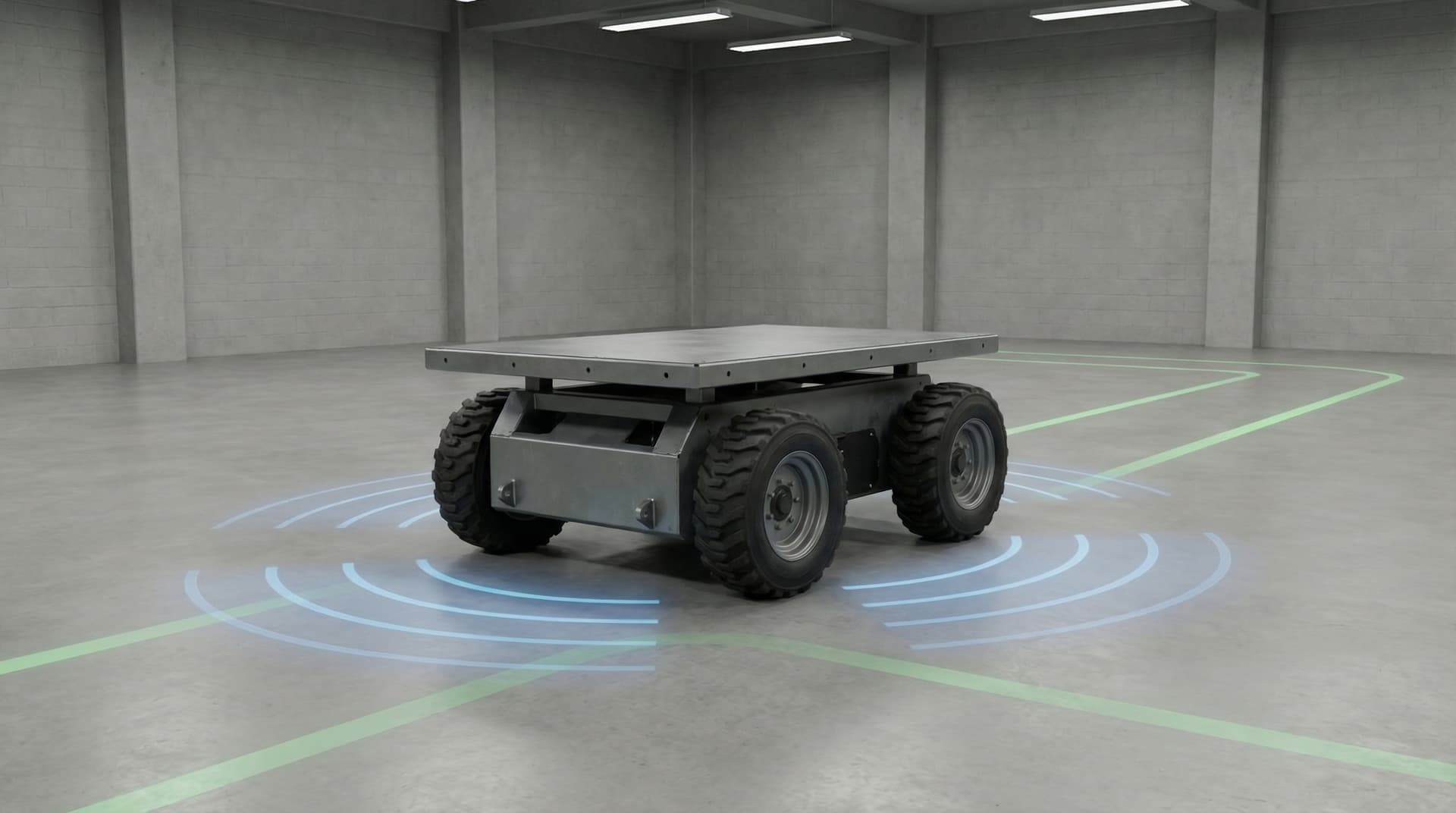
80kg payload autonomous mobile robot AMR with ROS 2 Nav2 and LiDAR SLAM

Overview

Engineering Scope & Context

In-house engineering development of an 80 kg payload AMR platform—custom skid-steer steel chassis, ROS 2 Humble Nav2 autonomy, LiDAR SLAM, and embedded motor control.

Engagement: YANTRIX R&D

Discipline: Robotics & Automation

Project Type: Robotics Engineering (AMR Chassis + ROS 2 Autonomy + Mechatronics)

Application: Industrial Automation & Logistics R&D

YantriX Scope Ownership

  • Skid-steer structural chassis design and payload deck packaging in SolidWorks
  • Motor, planetary gearbox, and drive wheel torque calculations
  • Embedded microcontroller hardware integration (ESP32-S3) with CAN-bus communication
  • Sensor packaging: 2D safety LiDAR, 9-axis IMU, and optical wheel encoders
  • ROS 2 Humble navigation stack setup, costmap configuration, and Nav2 tuning
  • Physical chassis fabrication coordination, wiring assembly, and benchtop testing in Surat

Key specifications

Core engineering parameters & stack.

80 kg
Payload Capacity (Design Target)
ROS 2
Humble Nav2 Architecture (Stack)
1.2 m/s
Top Velocity (Design Target)
< 5 cm
Terminal Docking (Design Target)

Objectives

What the project needed to achieve

  • Design a rigid welded chassis fitting within a 700 x 550 mm footprint with 80 kg payload capacity
  • Integrate closed-loop differential drive motors with optical encoder feedback and CAN-bus control
  • Deploy ROS 2 Humble with Cartographer 2D LiDAR SLAM and Nav2 autonomous path planning
  • Evaluate terminal docking accuracy using fiducial markers in controlled test runs
  • Establish an open modular hardware/software baseline for custom client AMR projects

Challenge

Engineering constraint

Commercial industrial AMRs are predominantly closed, expensive platforms that restrict access to low-level motor controllers, custom navigation algorithms, and hardware expansion ports. YantriX undertook this in-house R&D program to develop a fully accessible, robust research and validation platform capable of transporting up to 80 kg payloads while negotiating narrow 1.2 m aisles and achieving consistent docking alignment.

Approach

How YantriX approached the work

  1. 01

    Engineered a low center-of-gravity structural steel chassis with modular payload mounting rails in SolidWorks.

  2. 02

    Calculated motor torque requirements for accelerating an 80 kg payload up 5° inclines with 1.2 m/s top velocity.

  3. 03

    Developed custom ESP32-S3 firmware converting ROS 2 Twist velocity commands into PID closed-loop motor drive signals over CAN.

  4. 04

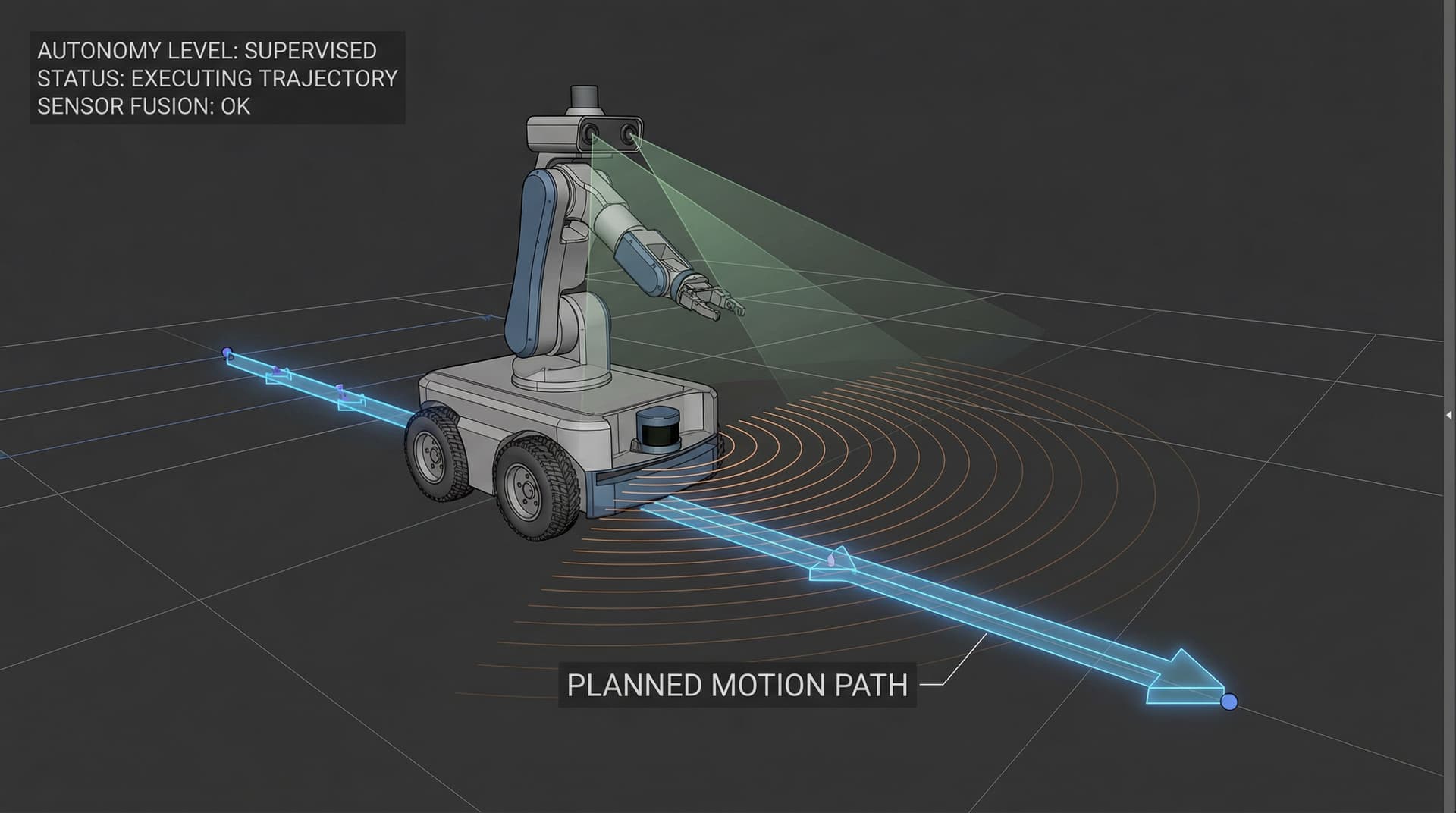
    Integrated 2D LiDAR with Cartographer SLAM to generate occupancy grid maps of the test environment.

  5. 05

    Configured Nav2 costmaps with inflation layers, recovery behaviors, and TEB local trajectory planners for dynamic obstacle avoidance.

Outcomes

What improved by the end

  • Fabricated and assembled functional AMR prototype platform at our Surat studio
  • Validated stable navigation targeting 1.2 m/s operational velocity with dynamic obstacle avoidance in prototype testing
  • Evaluated terminal docking sequence targeting sub-5 cm positioning under AprilTag fiducial camera guidance
  • Validated 80 kg static payload stability on chassis structure with zero observable frame flex
  • Created reusable ROS 2 navigation packages and hardware abstraction layers for customer applications

Deliverables

Engineering Deliverables & Outputs

  • Complete SolidWorks parametric chassis CAD models and fabrication drawings
  • Wiring schematics, power distribution architecture, and harness guidelines
  • ESP32-S3 motor control firmware codebase
  • ROS 2 Humble navigation workspace packages and URDF simulation model
  • Benchtop test notes and tuning documentation

Tools used

Stack and tooling

  • ROS 2 Humble
  • Nav2
  • SolidWorks
  • ESP32-S3
  • Cartographer SLAM
  • CAN Bus

Impact

Business-level effect

  • Gave YantriX an active physical testbed for benchmarking mobile robot navigation algorithms and sensor configurations
  • Established verified Skid-steer kinematics and PID control routines ready for client custom automation programs

Conclusion

Building open-architecture AMRs on ROS 2 provides engineering transparency, rapid sensor adaptation, and full control over autonomy algorithms without reliance on proprietary vendor lock-in.

Working on a similar engineering problem?

Developing a custom autonomous mobile robot (AMR), AGV, or automated material handling system? Discuss your payload, environment, and autonomy requirements with our robotics engineers.

Tagged

  • AMR
  • ROS 2
  • Nav2
  • LiDAR SLAM
  • Mobile Robotics
  • ESP32

Related case studies

Adjacent proof you can read next.

Continue exploring

Related blogs, services, and capability pages

Explore the engineering service and practical guides related to this work.

Similar Engineering Need?

Need help developing something similar?

Discuss your autonomous mobile robot (amr) platform development with nav2 & lidar slam requirements, design challenges, or target specifications with our engineering team. NDA support is available where required.