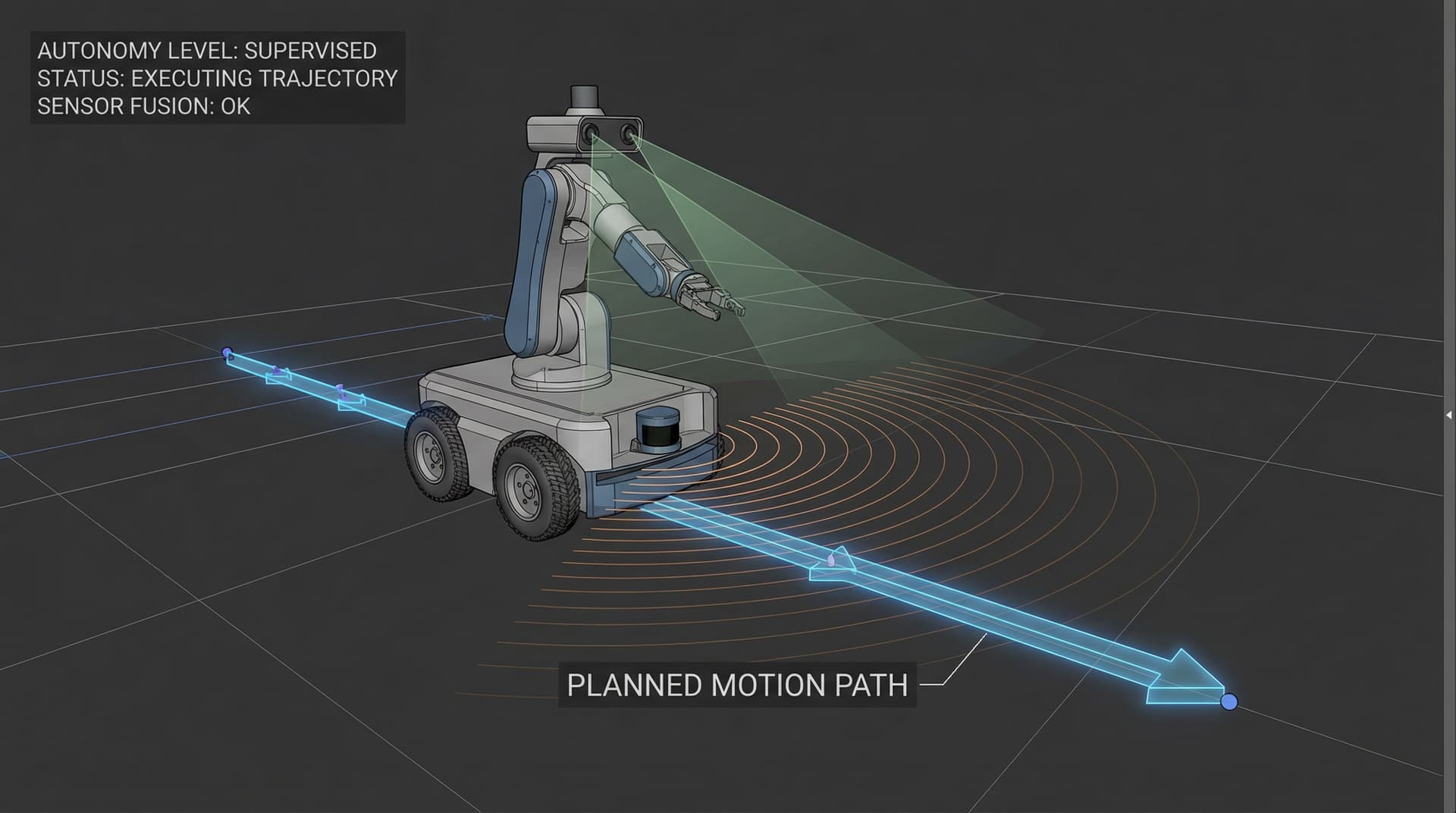
Mechanical design principles for robotic arms, explained simply.
A robotic arm is rarely limited by one variable. The challenge is balancing reach, payload, actuator size, structural stiffness, and manufacturability without overcomplicating the system.

Core idea
What this blog covers
When robotic arms are designed around kinematics alone, teams often discover too late that the structure is bulky, hard to assemble, or too flexible under real loads.
Main discussion
Start with architecture, not detail
The best robotic arm programs begin by defining joint architecture, motion targets, and actuator envelopes before refining brackets and aesthetic surfaces. That keeps the design aligned with actual mechanical constraints.
Stiffness is a system-level requirement
Structural flex can quietly erase the precision benefits of a good controller. Member geometry, bracket stiffness, and load paths all matter when an arm needs repeatable positioning under payload.
Design for prototyping from day one
A clean robotic arm concept should already reflect assembly access, bracket logic, realistic fabrication methods, and room for later control-system integration. That shortens the path from concept to useful hardware.
Key takeaways
What readers should remember
- Mechanical layout and actuator packaging should evolve together.
- Repeatability depends on stiffness, not just control quality.
- Prototype-friendly geometry saves time across the whole build cycle.
Have a machine to build? Let's scope it together.
Tell us about your project. We'll respond within 1–2 business days with a preliminary scope and timeline — no boilerplate, no up-sell.