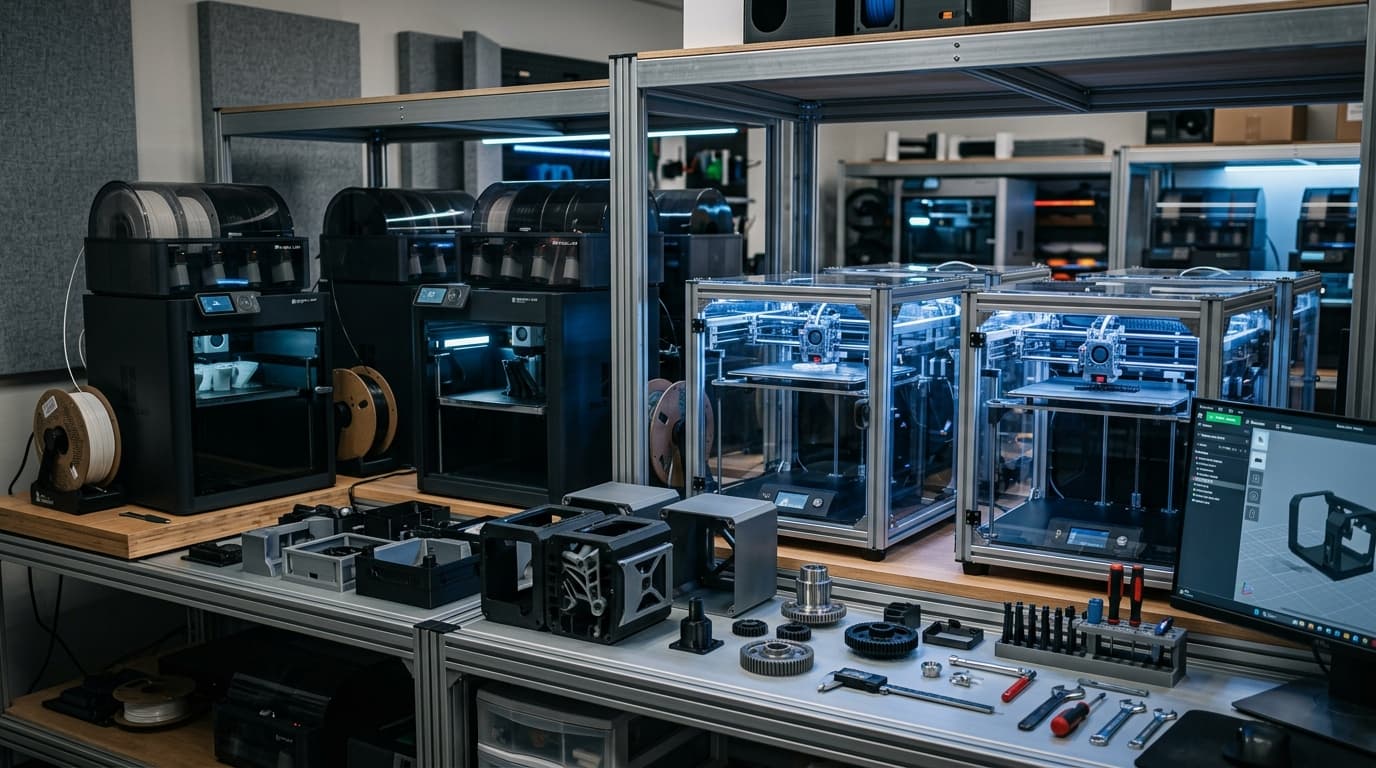
FDM, SLA, or SLS — picking the right 3D printing technology in India
FDM (fused-deposition) is the workhorse of Indian 3D printing services — cheapest per part, fastest turnaround, widest material range (PLA, ABS, PETG, TPU, Nylon, PETG-CF). Use it for functional prototypes, fixtures, jigs, enclosures, brackets, and anything load-bearing under 50 N. SLA / DLP resin printers are the right pick for fine-detail parts, jewellery masters, scale models, and watertight prototypes — but the parts are brittle and UV-sensitive. SLS (selective laser sintering) sits at the top — Nylon PA12 parts that survive snap-fits, hinges, and outdoor exposure for years. Most Indian SLS work is coordinated through specialized external manufacturing partners; expect standard partner lead times and minimum order thresholds.
What 3D printing actually costs in India (2026 numbers)
Realistic per-part pricing for the common cases: a 50 mm PLA bracket on FDM, ₹150-₹300; a functional Nylon-CF bracket the same size, ₹1,200-₹2,500; an SLA resin connector with M2 thread features, ₹400-₹900; an SLS Nylon end-use part, ₹2,500-₹6,000 depending on volume. Volume discounts kick in around 25 units (10-15% off) and 100 units (20-30% off). For above 500 units, ask the bureau for an injection-molding or urethane-casting quote in parallel — additive often loses on cost per unit at that scale.
Turnaround time and how to plan around it
Standard FDM: 2-4 business days from CAD-uploaded to print-complete, with delivery transit planned based on project location. SLA: add 1-2 days for resin cure. SLS: 5-7 days end-to-end because most bureaus batch SLS runs to fill the build chamber. The biggest avoidable delay is back-and-forth on bad CAD — wall thickness too thin, overhangs too aggressive, tolerances out of spec for the process. A bureau that does DFAM review before printing saves you a re-print cycle.
How to brief an Indian 3D printing bureau
Send STEP (preferred) or STL with explicit notes: target material, target finish, dimensions that need ±0.1 mm tolerance vs which can be ±0.3 mm, what mating parts the print will sit against, and whether it's a one-off or part of a batch. The bureau should respond with a quote that includes orientation, infill %, support strategy, and post-process plan in writing. If they quote without that level of detail, push back — that's where prints fail in the field.
Working with YantriX for 3D printing in India
We run a working FDM print farm and SLA setup in our Surat studio, with specialized processes such as SLS coordinated through external manufacturing partners. Every project receives an engineering review before printing, delivery requirements are coordinated based on project destination, and NDA support is available for confidential product programs. Share your specifications and CAD files to discuss scope and receive a transparent quotation.

