How the two technologies actually work
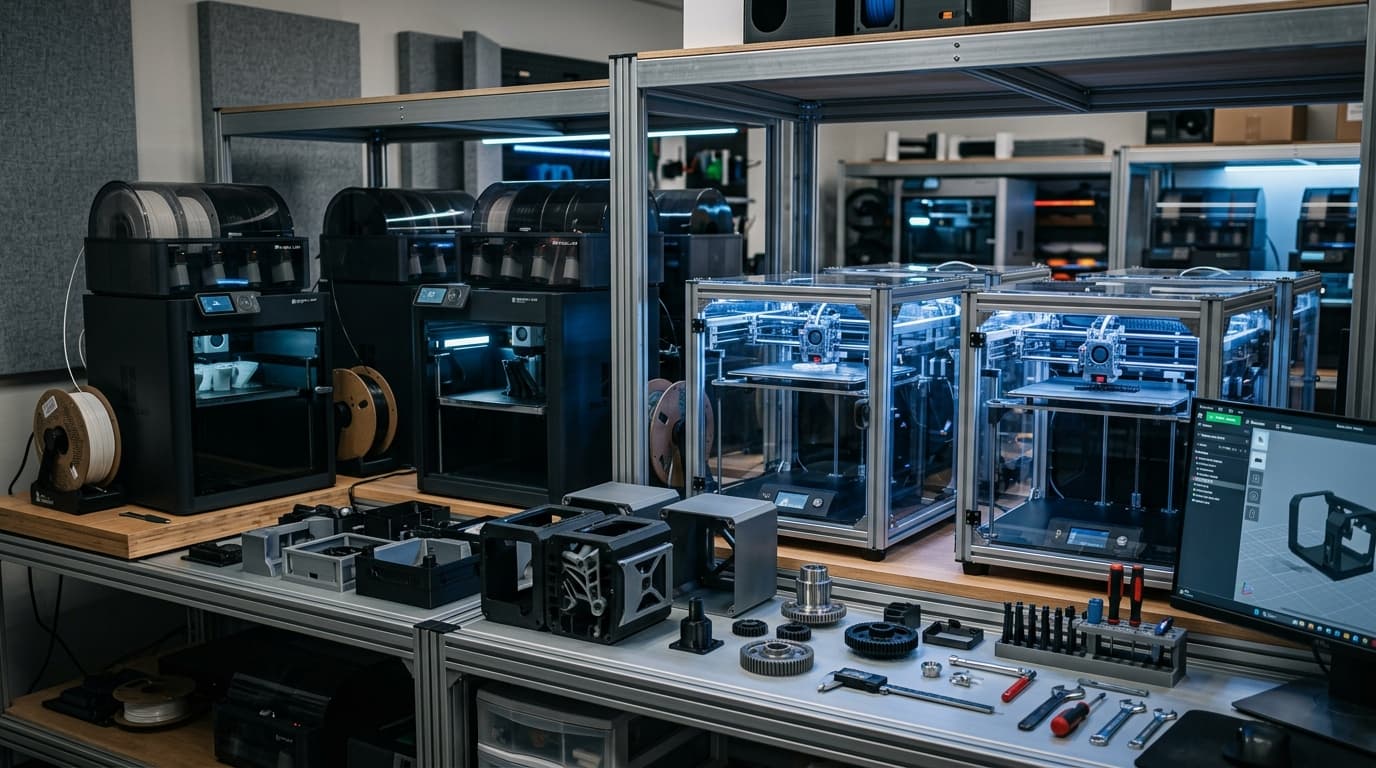
FDM extrudes melted thermoplastic through a nozzle, layer by layer. The part is anisotropic — stronger along the layer plane than perpendicular to it. SLA cures liquid resin with a UV light, layer by layer. Parts are isotropic, surface finish is glass-smooth out of the printer, but build envelope is smaller and material range is narrower.
Where FDM wins
Functional engineering parts, mechanical brackets, fixtures, jigs, enclosures, drone frames, robotic linkages, snap-fits, anything load-bearing, anything that sees UV or weather. FDM also wins on cost-per-cubic-cm by 3-5x and on build volume — large parts (>200 mm) usually go FDM by default.
Where SLA wins
Fine-feature parts (sub-1 mm details, small thread profiles), jewellery masters, cosmetic scale models, watertight prototypes, aesthetic prototypes where surface finish matters more than strength. SLA also has specialty engineering resins that FDM can't replicate.
What about SLS, MJF, and other technologies?
SLS and MJF sit above both — Nylon parts that are stronger than FDM, smoother than FDM, and durable enough for end-use. The catch is cost: SLS / MJF parts in India start around ₹2,000 versus ₹200 for FDM. Use them when you need real production-grade Nylon and the volume justifies the price (typically 25+ units).
Our default decision tree at YantriX
Functional or load-bearing? FDM — usually PETG, sometimes Nylon. Detail or finish-critical? SLA — usually tough resin. Outdoor or UV-exposed? FDM in ASA or PETG-CF. End-use Nylon at volume? Partner-supported SLS. Watertight prototype? SLA every time. We confirm the choice as part of our free DfAM review on every engineering 3D printing services in India project.