Injection molding DFM checklist
(1) Draft angles — minimum 0.5° on all walls, 1° preferred, 2° on textured surfaces. Without draft, the part can't release from the mold. (2) Parting line — choose it deliberately, not by accident. Place where flash will be hidden. (3) Wall thickness — uniform, typically 1.5-3 mm. Variation causes sink marks and warpage. (4) Ribs — height ≤ 3x wall thickness, thickness ≤ 0.6x wall thickness. Otherwise sink. (5) Undercuts — eliminate or design slides / lifters into the mold. Each adds significantly to tooling cost. Catch these in pre-tooling DFM and tooling cost stays manageable.
Sheet metal DFM checklist
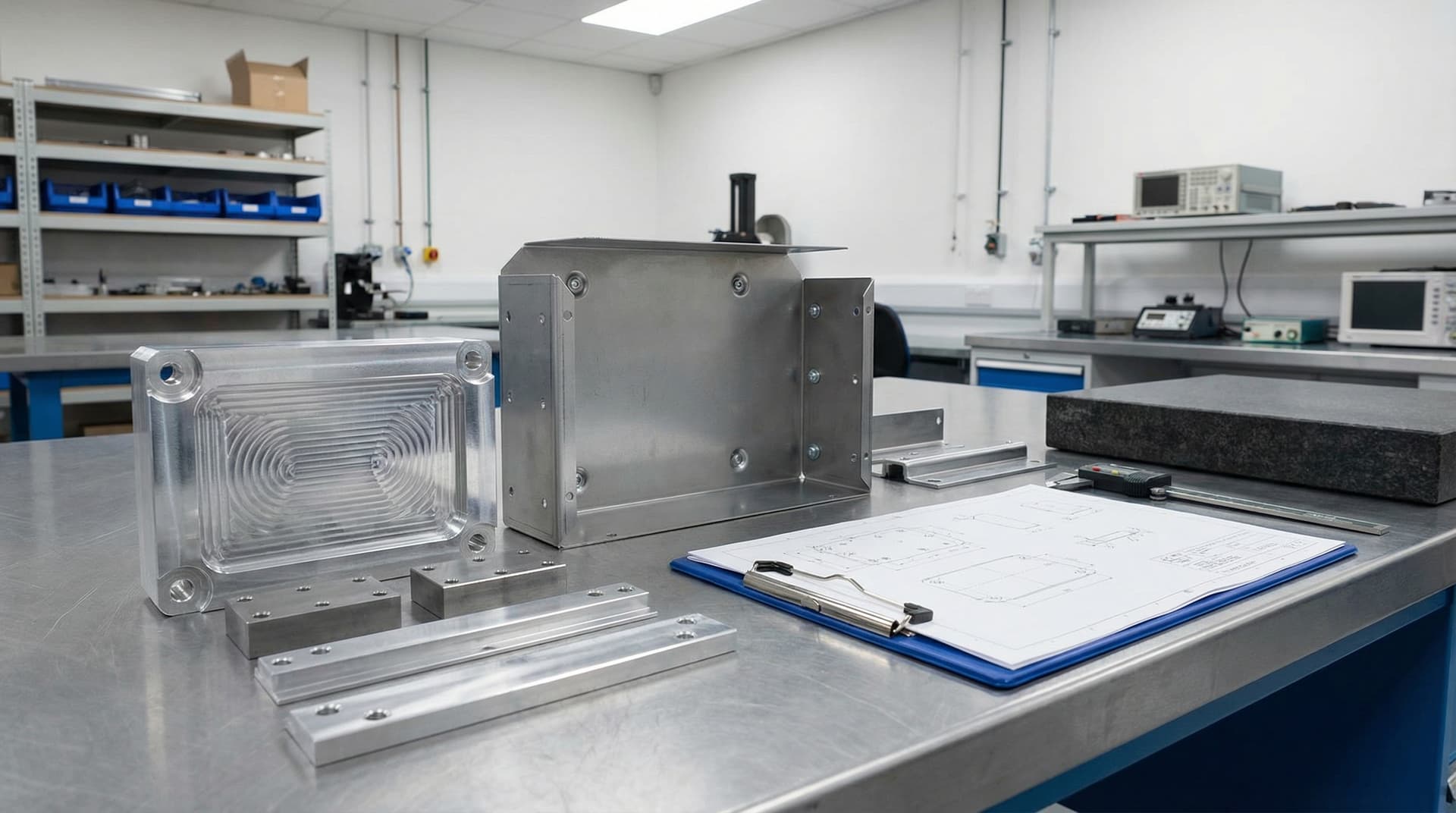
(1) K-factor matched to the vendor's press brake. (2) Bend radius matches available V-dies (6, 10, 16, 22 mm common). (3) Minimum flange length — typically 4x material thickness, otherwise the flange can't be held during bending. (4) Hole-to-bend distance — minimum 2.5x material thickness from the edge of a hole to the start of the bend, otherwise the hole deforms. (5) Bend reliefs — included on intersecting bends to prevent material tearing. (6) Material grade and finish specified explicitly.
CNC machining DFM checklist
(1) Tool access — every machined feature has to be reachable by a tool. Deep narrow pockets are expensive (long endmills) or impossible. (2) Internal radii — minimum 2x the cutting tool radius, typically 3 mm or 6 mm. Sharp internal corners aren't machinable. (3) Tolerance stacks — don't over-specify. ±0.025 mm tolerance is 4x more expensive than ±0.1 mm. Reserve tight tolerances for surfaces that actually need them. (4) Threads — specify standard (M3, M4, M5 etc.), not exotic. (5) Surface finish — specify Ra value (e.g. Ra 1.6 µm) not 'smooth' or 'polished'.
3D printing DFM checklist
(1) Wall thickness — minimum 1.2 mm for FDM load-bearing, 0.6 mm for SLA structural. (2) Overhangs — keep below 45° from vertical or design as supportable. (3) Print orientation — tell the bureau which face needs the strongest layer adhesion. (4) Hole sizes — design 0.2-0.4 mm oversize on FDM to compensate for melt flow. (5) Wall-and-infill thickness consistent across the part — variations cause warping. (6) Heat-set inserts vs printed threads — printed threads strip; specify inserts for any threaded interface that mates more than once.
Tolerance stacking and assembly fits
Across all manufacturing processes, the most expensive DFM mistake is over-specified tolerance stacks. A part with five tolerance dimensions, each at ±0.05 mm, ends up with worst-case assembly tolerance of ±0.25 mm — and a manufacturing cost that's 5-10x higher than necessary. Audit every tolerance: 'does this dimension actually need to be this tight?' Loosen everything that doesn't need to be tight.
How we run DFM review at YantriX
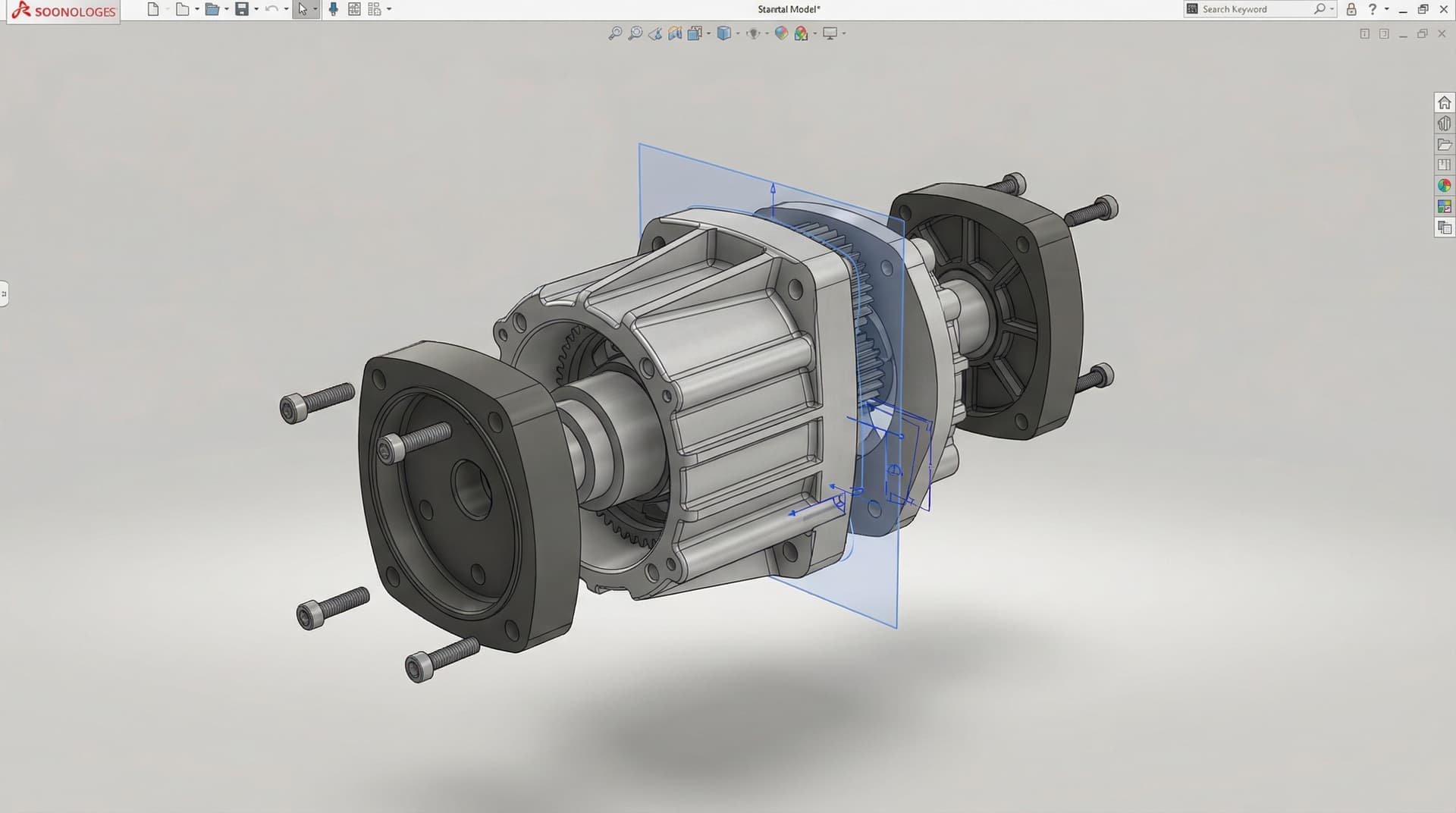
Every project we deliver includes a rigorous DFM review pass before final handoff as part of our full CAD Design Services in India. Output is a detailed report with annotated CAD screenshots, specific issues flagged, and fix recommendations. For client-supplied CAD, we offer DFM review as a standalone service — typically ₹15,000–50,000 for a complete product review depending on part count and complexity. Send us the CAD and target manufacturing process; we'll provide an estimated timeline and deliver a comprehensive DFM report based on part complexity.