500x faster topology exploration with an ML-surrogate FEA, case study.
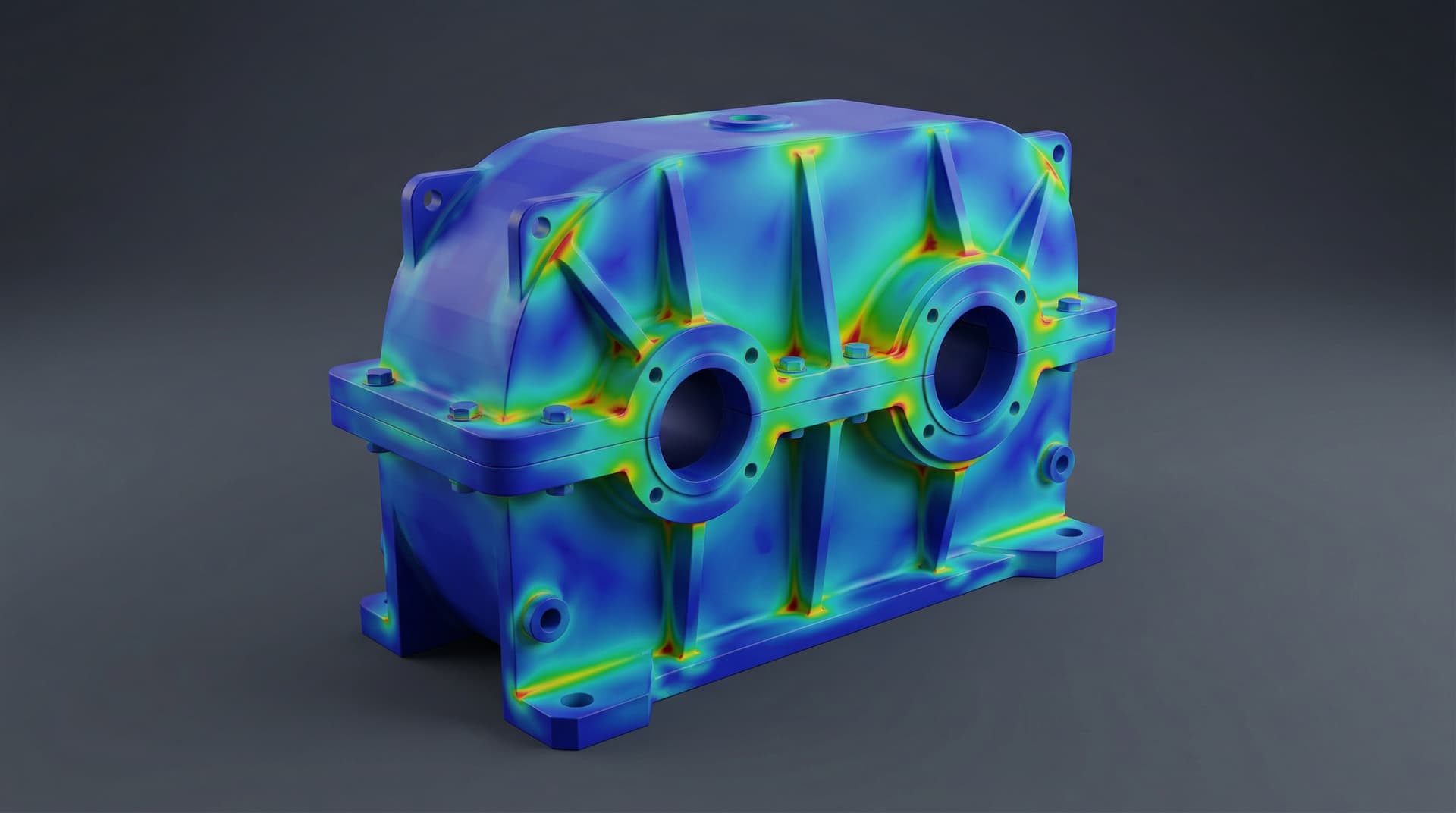
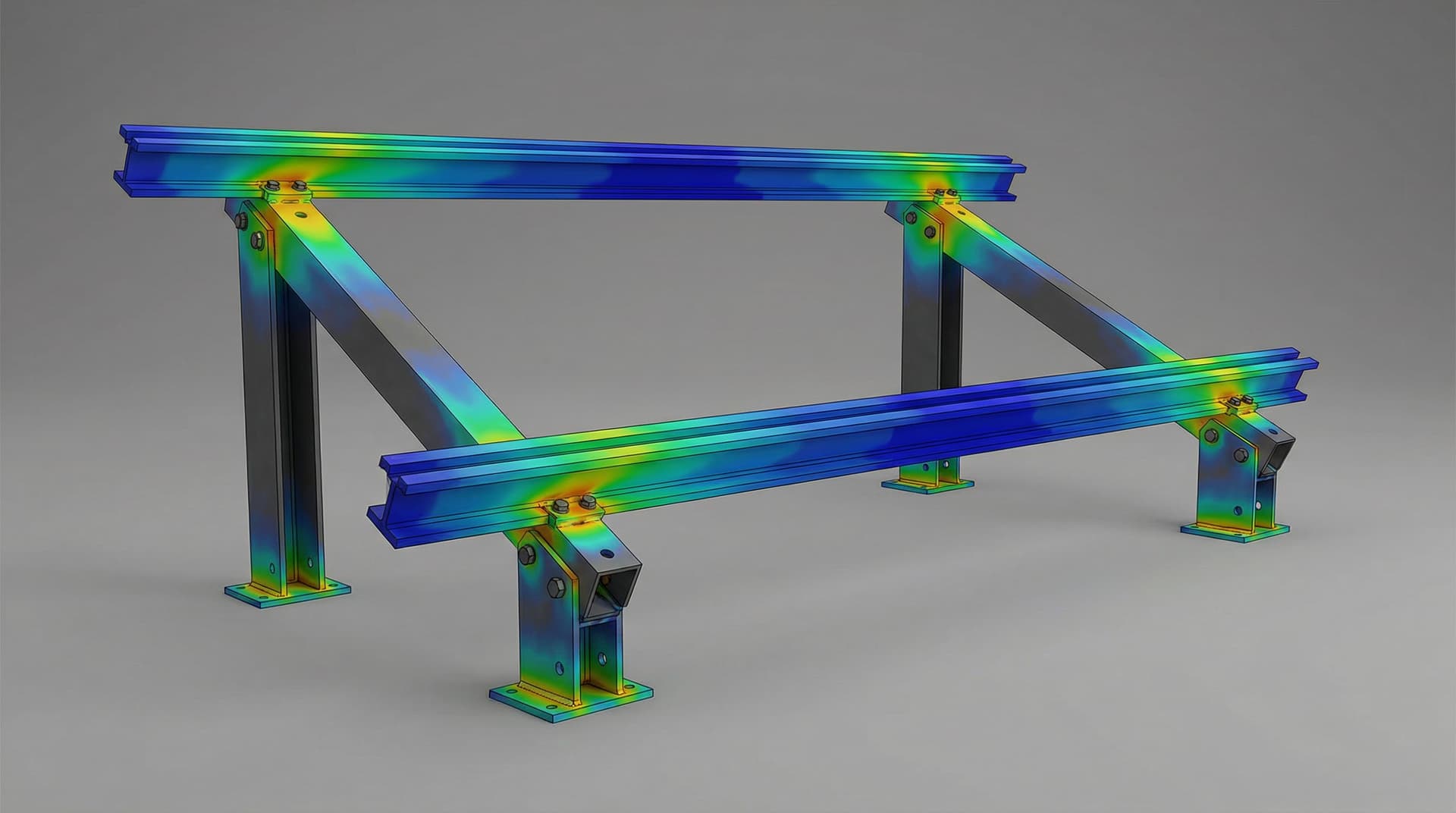
For an industrial-equipment client running hundreds of FEA sweeps per design cycle, Yantrix built an ML surrogate that predicts stress fields in tens of milliseconds — making full topology and parameter exploration interactive instead of overnight.

Overview
Why this study matters
A physics-informed neural network trained on 12,000 ANSYS runs replaces the full solver for early-stage topology exploration — predicting von-Mises stress fields in ~40 ms.
Project Type: Applied AI + Engineering Simulation
Industry: Industrial equipment
Service Used: ML-Accelerated Engineering + Surrogate Modeling
Objective
What the project needed to achieve
- Predict von-Mises stress fields over parametric bracket geometry in real time
- Maintain a bounded error envelope suitable for early-stage exploration
- Integrate with the existing parametric CAD workflow
- Make the fall-back to full ANSYS solver explicit and easy
Challenge
Engineering constraint
The client's design team was running ANSYS studies to validate bracket and frame variants. Each solve took 18-22 minutes, which capped the number of variants the team could realistically explore before freezing geometry. They asked whether ML could give them an interactive stress-field preview inside their parametric CAD workflow.
Deliverables
What the client receives
- Trained PINN surrogate with documented validity envelope
- Training data pipeline reproducing the ANSYS sweep
- FastAPI model-serving container
- SolidWorks task-pane integration
- Monitoring dashboard for model drift vs. new ANSYS runs
Approach
How Yantrix approached the work
- Defined the parameter space (thickness distribution, rib count, fillet radii, load direction) and ran an active-learning campaign to pick the 12,000 ANSYS runs that spanned it most efficiently.
- Trained a physics-informed neural network over stress-field outputs, using the mesh topology as a graph structure and validating against held-out physics.
- Deployed the model behind a FastAPI service that the SolidWorks task-pane add-in calls on every parameter change.
- Published a validity envelope so engineers know when the surrogate is inside its trained regime versus when to fall back to ANSYS.
Outcome
What improved by the end
- ~40 ms inference time for a full stress-field prediction vs. 22-minute ANSYS baseline — a 500x speed-up
- R-squared of 0.987 on held-out geometries within the trained envelope
- Interactive stress preview inside the CAD tool — parameter sweeps in seconds
- Explicit validity bounds so engineers know when to defer to the full solver
Tools used
- PyTorch
- NVIDIA Modulus (physics-ML)
- ANSYS (for training ground truth)
- SolidWorks task-pane add-in
- FastAPI for model serving
- Weights & Biases for experiment tracking
Impact
- Design-exploration throughput up by more than an order of magnitude
- Shorter convergence on final geometry -> fewer full-solver validation runs
- Cultural shift: engineers explore more variants instead of guarding FEA budget
Conclusion
The real value isn't replacing FEA — it's making exploration cheap enough that engineers actually do it. The full solver remains the source of truth; the surrogate just makes the path there much faster.
Next step
Running a lot of similar FEA / CFD studies? Let's talk about whether a surrogate fits — and what the training campaign would look like.
Have a machine to build? Let's scope it together.
Tell us about your project. We'll respond within 1-2 business days with a preliminary scope and timeline — no boilerplate, no up-sell.